mirror of
https://github.com/huggingface/diffusers.git
synced 2026-01-27 17:22:53 +03:00
 3eb498e7b4
* add: controlnet sdxl.

* modifications to controlnet.

* run styling.

* add: __init__.pys

* incorporate https://github.com/huggingface/diffusers/pull/4019 changes.

* run make fix-copies.

* resize the conditioning images.

* remove autocast.

* run styling.

* disable autocast.

* debugging

* device placement.

* back to autocast.

* remove comment.

* save some memory by reusing the vae and unet in the pipeline.

* apply styling.

* Allow low precision sd xl

* finish

* finish

* changes to accommodate the improved VAE.

* modifications to how we handle vae encoding in the training.

* make style

* make existing controlnet fast tests pass.

* change vae checkpoint cli arg.

* fix: vae pretrained paths.

* fix: steps in get_scheduler().

* debugging.

* debugging./

* fix: weight conversion.

* add: docs.

* add: limited tests./

* add: datasets to the requirements.

* update docstrings and incorporate the usage of watermarking.

* incorporate fix from #4083

* fix watermarking dependency handling.

* run make-fix-copies.

* Empty-Commit

* Update requirements_sdxl.txt

* remove vae upcasting part.

* Apply suggestions from code review

Co-authored-by: Patrick von Platen <patrick.v.platen@gmail.com>

* run make style

* run make fix-copies.

* disable suppot for multicontrolnet.

* Apply suggestions from code review

Co-authored-by: Patrick von Platen <patrick.v.platen@gmail.com>

* run make fix-copies.

* dtyle/.

* fix-copies.

---------

Co-authored-by: Patrick von Platen <patrick.v.platen@gmail.com>
466 lines
19 KiB
Markdown
466 lines
19 KiB
Markdown
# ControlNet training example
|
||
|
||
[Adding Conditional Control to Text-to-Image Diffusion Models](https://arxiv.org/abs/2302.05543) by Lvmin Zhang and Maneesh Agrawala.
|
||
|
||
This example is based on the [training example in the original ControlNet repository](https://github.com/lllyasviel/ControlNet/blob/main/docs/train.md). It trains a ControlNet to fill circles using a [small synthetic dataset](https://huggingface.co/datasets/fusing/fill50k).
|
||
|
||
## Installing the dependencies
|
||
|
||
Before running the scripts, make sure to install the library's training dependencies:
|
||
|
||
**Important**
|
||
|
||
To make sure you can successfully run the latest versions of the example scripts, we highly recommend **installing from source** and keeping the install up to date as we update the example scripts frequently and install some example-specific requirements. To do this, execute the following steps in a new virtual environment:
|
||
```bash
|
||
git clone https://github.com/huggingface/diffusers
|
||
cd diffusers
|
||
pip install -e .
|
||
```
|
||
|
||
Then cd in the example folder and run
|
||
```bash
|
||
pip install -r requirements.txt
|
||
```
|
||
|
||
And initialize an [🤗Accelerate](https://github.com/huggingface/accelerate/) environment with:
|
||
|
||
```bash
|
||
accelerate config
|
||
```
|
||
|
||
Or for a default accelerate configuration without answering questions about your environment
|
||
|
||
```bash
|
||
accelerate config default
|
||
```
|
||
|
||
Or if your environment doesn't support an interactive shell e.g. a notebook
|
||
|
||
```python
|
||
from accelerate.utils import write_basic_config
|
||
write_basic_config()
|
||
```
|
||
|
||
## Circle filling dataset
|
||
|
||
The original dataset is hosted in the [ControlNet repo](https://huggingface.co/lllyasviel/ControlNet/blob/main/training/fill50k.zip). We re-uploaded it to be compatible with `datasets` [here](https://huggingface.co/datasets/fusing/fill50k). Note that `datasets` handles dataloading within the training script.
|
||
|
||
Our training examples use [Stable Diffusion 1.5](https://huggingface.co/runwayml/stable-diffusion-v1-5) as the original set of ControlNet models were trained from it. However, ControlNet can be trained to augment any Stable Diffusion compatible model (such as [CompVis/stable-diffusion-v1-4](https://huggingface.co/CompVis/stable-diffusion-v1-4)) or [stabilityai/stable-diffusion-2-1](https://huggingface.co/stabilityai/stable-diffusion-2-1).
|
||
|
||
## Training
|
||
|
||
Our training examples use two test conditioning images. They can be downloaded by running
|
||
|
||
```sh
|
||
wget https://huggingface.co/datasets/huggingface/documentation-images/resolve/main/diffusers/controlnet_training/conditioning_image_1.png
|
||
|
||
wget https://huggingface.co/datasets/huggingface/documentation-images/resolve/main/diffusers/controlnet_training/conditioning_image_2.png
|
||
```
|
||
|
||
|
||
```bash
|
||
export MODEL_DIR="runwayml/stable-diffusion-v1-5"
|
||
export OUTPUT_DIR="path to save model"
|
||
|
||
accelerate launch train_controlnet.py \
|
||
--pretrained_model_name_or_path=$MODEL_DIR \
|
||
--output_dir=$OUTPUT_DIR \
|
||
--dataset_name=fusing/fill50k \
|
||
--resolution=512 \
|
||
--learning_rate=1e-5 \
|
||
--validation_image "./conditioning_image_1.png" "./conditioning_image_2.png" \
|
||
--validation_prompt "red circle with blue background" "cyan circle with brown floral background" \
|
||
--train_batch_size=4
|
||
```
|
||
|
||
This default configuration requires ~38GB VRAM.
|
||
|
||
By default, the training script logs outputs to tensorboard. Pass `--report_to wandb` to use weights and
|
||
biases.
|
||
|
||
Gradient accumulation with a smaller batch size can be used to reduce training requirements to ~20 GB VRAM.
|
||
|
||
```bash
|
||
export MODEL_DIR="runwayml/stable-diffusion-v1-5"
|
||
export OUTPUT_DIR="path to save model"
|
||
|
||
accelerate launch train_controlnet.py \
|
||
--pretrained_model_name_or_path=$MODEL_DIR \
|
||
--output_dir=$OUTPUT_DIR \
|
||
--dataset_name=fusing/fill50k \
|
||
--resolution=512 \
|
||
--learning_rate=1e-5 \
|
||
--validation_image "./conditioning_image_1.png" "./conditioning_image_2.png" \
|
||
--validation_prompt "red circle with blue background" "cyan circle with brown floral background" \
|
||
--train_batch_size=1 \
|
||
--gradient_accumulation_steps=4
|
||
```
|
||
|
||
## Training with multiple GPUs
|
||
|
||
`accelerate` allows for seamless multi-GPU training. Follow the instructions [here](https://huggingface.co/docs/accelerate/basic_tutorials/launch)
|
||
for running distributed training with `accelerate`. Here is an example command:
|
||
|
||
```bash
|
||
export MODEL_DIR="runwayml/stable-diffusion-v1-5"
|
||
export OUTPUT_DIR="path to save model"
|
||
|
||
accelerate launch --mixed_precision="fp16" --multi_gpu train_controlnet.py \
|
||
--pretrained_model_name_or_path=$MODEL_DIR \
|
||
--output_dir=$OUTPUT_DIR \
|
||
--dataset_name=fusing/fill50k \
|
||
--resolution=512 \
|
||
--learning_rate=1e-5 \
|
||
--validation_image "./conditioning_image_1.png" "./conditioning_image_2.png" \
|
||
--validation_prompt "red circle with blue background" "cyan circle with brown floral background" \
|
||
--train_batch_size=4 \
|
||
--mixed_precision="fp16" \
|
||
--tracker_project_name="controlnet-demo" \
|
||
--report_to=wandb
|
||
```
|
||
|
||
## Example results
|
||
|
||
#### After 300 steps with batch size 8
|
||
|
||
| | |
|
||
|-------------------|:-------------------------:|
|
||
| | red circle with blue background |
|
||
 | 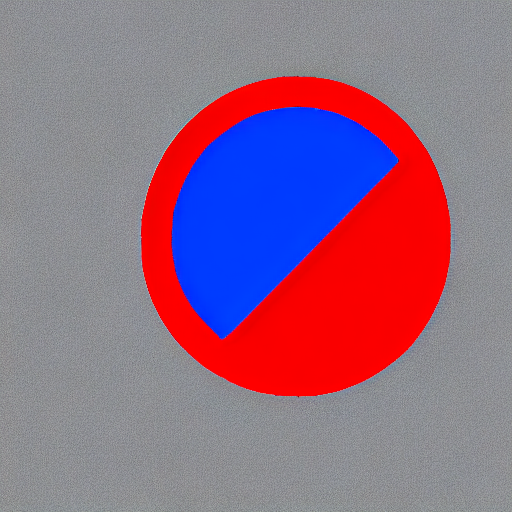 |
|
||
| | cyan circle with brown floral background |
|
||
 |  |
|
||
|
||
|
||
#### After 6000 steps with batch size 8:
|
||
|
||
| | |
|
||
|-------------------|:-------------------------:|
|
||
| | red circle with blue background |
|
||
 |  |
|
||
| | cyan circle with brown floral background |
|
||
 | 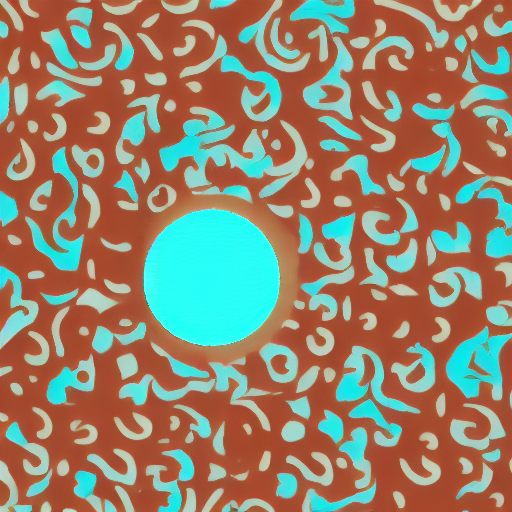 |
|
||
|
||
## Training on a 16 GB GPU
|
||
|
||
Optimizations:
|
||
- Gradient checkpointing
|
||
- bitsandbyte's 8-bit optimizer
|
||
|
||
[bitandbytes install instructions](https://github.com/TimDettmers/bitsandbytes#requirements--installation).
|
||
|
||
```bash
|
||
export MODEL_DIR="runwayml/stable-diffusion-v1-5"
|
||
export OUTPUT_DIR="path to save model"
|
||
|
||
accelerate launch train_controlnet.py \
|
||
--pretrained_model_name_or_path=$MODEL_DIR \
|
||
--output_dir=$OUTPUT_DIR \
|
||
--dataset_name=fusing/fill50k \
|
||
--resolution=512 \
|
||
--learning_rate=1e-5 \
|
||
--validation_image "./conditioning_image_1.png" "./conditioning_image_2.png" \
|
||
--validation_prompt "red circle with blue background" "cyan circle with brown floral background" \
|
||
--train_batch_size=1 \
|
||
--gradient_accumulation_steps=4 \
|
||
--gradient_checkpointing \
|
||
--use_8bit_adam
|
||
```
|
||
|
||
## Training on a 12 GB GPU
|
||
|
||
Optimizations:
|
||
- Gradient checkpointing
|
||
- bitsandbyte's 8-bit optimizer
|
||
- xformers
|
||
- set grads to none
|
||
|
||
```bash
|
||
export MODEL_DIR="runwayml/stable-diffusion-v1-5"
|
||
export OUTPUT_DIR="path to save model"
|
||
|
||
accelerate launch train_controlnet.py \
|
||
--pretrained_model_name_or_path=$MODEL_DIR \
|
||
--output_dir=$OUTPUT_DIR \
|
||
--dataset_name=fusing/fill50k \
|
||
--resolution=512 \
|
||
--learning_rate=1e-5 \
|
||
--validation_image "./conditioning_image_1.png" "./conditioning_image_2.png" \
|
||
--validation_prompt "red circle with blue background" "cyan circle with brown floral background" \
|
||
--train_batch_size=1 \
|
||
--gradient_accumulation_steps=4 \
|
||
--gradient_checkpointing \
|
||
--use_8bit_adam \
|
||
--enable_xformers_memory_efficient_attention \
|
||
--set_grads_to_none
|
||
```
|
||
|
||
When using `enable_xformers_memory_efficient_attention`, please make sure to install `xformers` by `pip install xformers`.
|
||
|
||
## Training on an 8 GB GPU
|
||
|
||
We have not exhaustively tested DeepSpeed support for ControlNet. While the configuration does
|
||
save memory, we have not confirmed the configuration to train successfully. You will very likely
|
||
have to make changes to the config to have a successful training run.
|
||
|
||
Optimizations:
|
||
- Gradient checkpointing
|
||
- xformers
|
||
- set grads to none
|
||
- DeepSpeed stage 2 with parameter and optimizer offloading
|
||
- fp16 mixed precision
|
||
|
||
[DeepSpeed](https://www.deepspeed.ai/) can offload tensors from VRAM to either
|
||
CPU or NVME. This requires significantly more RAM (about 25 GB).
|
||
|
||
Use `accelerate config` to enable DeepSpeed stage 2.
|
||
|
||
The relevant parts of the resulting accelerate config file are
|
||
|
||
```yaml
|
||
compute_environment: LOCAL_MACHINE
|
||
deepspeed_config:
|
||
gradient_accumulation_steps: 4
|
||
offload_optimizer_device: cpu
|
||
offload_param_device: cpu
|
||
zero3_init_flag: false
|
||
zero_stage: 2
|
||
distributed_type: DEEPSPEED
|
||
```
|
||
|
||
See [documentation](https://huggingface.co/docs/accelerate/usage_guides/deepspeed) for more DeepSpeed configuration options.
|
||
|
||
Changing the default Adam optimizer to DeepSpeed's Adam
|
||
`deepspeed.ops.adam.DeepSpeedCPUAdam` gives a substantial speedup but
|
||
it requires CUDA toolchain with the same version as pytorch. 8-bit optimizer
|
||
does not seem to be compatible with DeepSpeed at the moment.
|
||
|
||
```bash
|
||
export MODEL_DIR="runwayml/stable-diffusion-v1-5"
|
||
export OUTPUT_DIR="path to save model"
|
||
|
||
accelerate launch train_controlnet.py \
|
||
--pretrained_model_name_or_path=$MODEL_DIR \
|
||
--output_dir=$OUTPUT_DIR \
|
||
--dataset_name=fusing/fill50k \
|
||
--resolution=512 \
|
||
--validation_image "./conditioning_image_1.png" "./conditioning_image_2.png" \
|
||
--validation_prompt "red circle with blue background" "cyan circle with brown floral background" \
|
||
--train_batch_size=1 \
|
||
--gradient_accumulation_steps=4 \
|
||
--gradient_checkpointing \
|
||
--enable_xformers_memory_efficient_attention \
|
||
--set_grads_to_none \
|
||
--mixed_precision fp16
|
||
```
|
||
|
||
## Performing inference with the trained ControlNet
|
||
|
||
The trained model can be run the same as the original ControlNet pipeline with the newly trained ControlNet.
|
||
Set `base_model_path` and `controlnet_path` to the values `--pretrained_model_name_or_path` and
|
||
`--output_dir` were respectively set to in the training script.
|
||
|
||
```py
|
||
from diffusers import StableDiffusionControlNetPipeline, ControlNetModel, UniPCMultistepScheduler
|
||
from diffusers.utils import load_image
|
||
import torch
|
||
|
||
base_model_path = "path to model"
|
||
controlnet_path = "path to controlnet"
|
||
|
||
controlnet = ControlNetModel.from_pretrained(controlnet_path, torch_dtype=torch.float16)
|
||
pipe = StableDiffusionControlNetPipeline.from_pretrained(
|
||
base_model_path, controlnet=controlnet, torch_dtype=torch.float16
|
||
)
|
||
|
||
# speed up diffusion process with faster scheduler and memory optimization
|
||
pipe.scheduler = UniPCMultistepScheduler.from_config(pipe.scheduler.config)
|
||
# remove following line if xformers is not installed or when using Torch 2.0.
|
||
pipe.enable_xformers_memory_efficient_attention()
|
||
# memory optimization.
|
||
pipe.enable_model_cpu_offload()
|
||
|
||
control_image = load_image("./conditioning_image_1.png")
|
||
prompt = "pale golden rod circle with old lace background"
|
||
|
||
# generate image
|
||
generator = torch.manual_seed(0)
|
||
image = pipe(
|
||
prompt, num_inference_steps=20, generator=generator, image=control_image
|
||
).images[0]
|
||
image.save("./output.png")
|
||
```
|
||
|
||
## Training with Flax/JAX
|
||
|
||
For faster training on TPUs and GPUs you can leverage the flax training example. Follow the instructions above to get the model and dataset before running the script.
|
||
|
||
### Running on Google Cloud TPU
|
||
|
||
See below for commands to set up a TPU VM(`--accelerator-type v4-8`). For more details about how to set up and use TPUs, refer to [Cloud docs for single VM setup](https://cloud.google.com/tpu/docs/run-calculation-jax).
|
||
|
||
First create a single TPUv4-8 VM and connect to it:
|
||
|
||
```
|
||
ZONE=us-central2-b
|
||
TPU_TYPE=v4-8
|
||
VM_NAME=hg_flax
|
||
|
||
gcloud alpha compute tpus tpu-vm create $VM_NAME \
|
||
--zone $ZONE \
|
||
--accelerator-type $TPU_TYPE \
|
||
--version tpu-vm-v4-base
|
||
|
||
gcloud alpha compute tpus tpu-vm ssh $VM_NAME --zone $ZONE -- \
|
||
```
|
||
|
||
When connected install JAX `0.4.5`:
|
||
|
||
```
|
||
pip install "jax[tpu]==0.4.5" -f https://storage.googleapis.com/jax-releases/libtpu_releases.html
|
||
```
|
||
|
||
To verify that JAX was correctly installed, you can run the following command:
|
||
|
||
```
|
||
import jax
|
||
jax.device_count()
|
||
```
|
||
|
||
This should display the number of TPU cores, which should be 4 on a TPUv4-8 VM.
|
||
|
||
Then install Diffusers and the library's training dependencies:
|
||
|
||
```bash
|
||
git clone https://github.com/huggingface/diffusers
|
||
cd diffusers
|
||
pip install .
|
||
```
|
||
|
||
Then cd in the example folder and run
|
||
|
||
```bash
|
||
pip install -U -r requirements_flax.txt
|
||
```
|
||
|
||
If you want to use Weights and Biases logging, you should also install `wandb` now
|
||
|
||
```bash
|
||
pip install wandb
|
||
```
|
||
|
||
|
||
Now let's downloading two conditioning images that we will use to run validation during the training in order to track our progress
|
||
|
||
```
|
||
wget https://huggingface.co/datasets/huggingface/documentation-images/resolve/main/diffusers/controlnet_training/conditioning_image_1.png
|
||
wget https://huggingface.co/datasets/huggingface/documentation-images/resolve/main/diffusers/controlnet_training/conditioning_image_2.png
|
||
```
|
||
|
||
We encourage you to store or share your model with the community. To use huggingface hub, please login to your Hugging Face account, or ([create one](https://huggingface.co/docs/diffusers/main/en/training/hf.co/join) if you don’t have one already):
|
||
|
||
```
|
||
huggingface-cli login
|
||
```
|
||
|
||
Make sure you have the `MODEL_DIR`,`OUTPUT_DIR` and `HUB_MODEL_ID` environment variables set. The `OUTPUT_DIR` and `HUB_MODEL_ID` variables specify where to save the model to on the Hub:
|
||
|
||
```bash
|
||
export MODEL_DIR="runwayml/stable-diffusion-v1-5"
|
||
export OUTPUT_DIR="runs/fill-circle-{timestamp}"
|
||
export HUB_MODEL_ID="controlnet-fill-circle"
|
||
```
|
||
|
||
And finally start the training
|
||
|
||
```bash
|
||
python3 train_controlnet_flax.py \
|
||
--pretrained_model_name_or_path=$MODEL_DIR \
|
||
--output_dir=$OUTPUT_DIR \
|
||
--dataset_name=fusing/fill50k \
|
||
--resolution=512 \
|
||
--learning_rate=1e-5 \
|
||
--validation_image "./conditioning_image_1.png" "./conditioning_image_2.png" \
|
||
--validation_prompt "red circle with blue background" "cyan circle with brown floral background" \
|
||
--validation_steps=1000 \
|
||
--train_batch_size=2 \
|
||
--revision="non-ema" \
|
||
--from_pt \
|
||
--report_to="wandb" \
|
||
--tracker_project_name=$HUB_MODEL_ID \
|
||
--num_train_epochs=11 \
|
||
--push_to_hub \
|
||
--hub_model_id=$HUB_MODEL_ID
|
||
```
|
||
|
||
Since we passed the `--push_to_hub` flag, it will automatically create a model repo under your huggingface account based on `$HUB_MODEL_ID`. By the end of training, the final checkpoint will be automatically stored on the hub. You can find an example model repo [here](https://huggingface.co/YiYiXu/fill-circle-controlnet).
|
||
|
||
Our training script also provides limited support for streaming large datasets from the Hugging Face Hub. In order to enable streaming, one must also set `--max_train_samples`. Here is an example command (from [this blog article](https://huggingface.co/blog/train-your-controlnet)):
|
||
|
||
```bash
|
||
export MODEL_DIR="runwayml/stable-diffusion-v1-5"
|
||
export OUTPUT_DIR="runs/uncanny-faces-{timestamp}"
|
||
export HUB_MODEL_ID="controlnet-uncanny-faces"
|
||
|
||
python3 train_controlnet_flax.py \
|
||
--pretrained_model_name_or_path=$MODEL_DIR \
|
||
--output_dir=$OUTPUT_DIR \
|
||
--dataset_name=multimodalart/facesyntheticsspigacaptioned \
|
||
--streaming \
|
||
--conditioning_image_column=spiga_seg \
|
||
--image_column=image \
|
||
--caption_column=image_caption \
|
||
--resolution=512 \
|
||
--max_train_samples 100000 \
|
||
--learning_rate=1e-5 \
|
||
--train_batch_size=1 \
|
||
--revision="flax" \
|
||
--report_to="wandb" \
|
||
--tracker_project_name=$HUB_MODEL_ID
|
||
```
|
||
|
||
Note, however, that the performance of the TPUs might get bottlenecked as streaming with `datasets` is not optimized for images. For ensuring maximum throughput, we encourage you to explore the following options:
|
||
|
||
* [Webdataset](https://webdataset.github.io/webdataset/)
|
||
* [TorchData](https://github.com/pytorch/data)
|
||
* [TensorFlow Datasets](https://www.tensorflow.org/datasets/tfless_tfds)
|
||
|
||
When work with a larger dataset, you may need to run training process for a long time and it’s useful to save regular checkpoints during the process. You can use the following argument to enable intermediate checkpointing:
|
||
|
||
```bash
|
||
--checkpointing_steps=500
|
||
```
|
||
This will save the trained model in subfolders of your output_dir. Subfolder names is the number of steps performed so far; for example: a checkpoint saved after 500 training steps would be saved in a subfolder named 500
|
||
|
||
You can then start your training from this saved checkpoint with
|
||
|
||
```bash
|
||
--controlnet_model_name_or_path="./control_out/500"
|
||
```
|
||
|
||
We support training with the Min-SNR weighting strategy proposed in [Efficient Diffusion Training via Min-SNR Weighting Strategy](https://arxiv.org/abs/2303.09556) which helps to achieve faster convergence by rebalancing the loss. To use it, one needs to set the `--snr_gamma` argument. The recommended value when using it is `5.0`.
|
||
|
||
We also support gradient accumulation - it is a technique that lets you use a bigger batch size than your machine would normally be able to fit into memory. You can use `gradient_accumulation_steps` argument to set gradient accumulation steps. The ControlNet author recommends using gradient accumulation to achieve better convergence. Read more [here](https://github.com/lllyasviel/ControlNet/blob/main/docs/train.md#more-consideration-sudden-converge-phenomenon-and-gradient-accumulation).
|
||
|
||
You can **profile your code** with:
|
||
|
||
```bash
|
||
--profile_steps==5
|
||
```
|
||
|
||
Refer to the [JAX documentation on profiling](https://jax.readthedocs.io/en/latest/profiling.html). To inspect the profile trace, you'll have to install and start Tensorboard with the profile plugin:
|
||
|
||
```bash
|
||
pip install tensorflow tensorboard-plugin-profile
|
||
tensorboard --logdir runs/fill-circle-100steps-20230411_165612/
|
||
```
|
||
|
||
The profile can then be inspected at http://localhost:6006/#profile
|
||
|
||
Sometimes you'll get version conflicts (error messages like `Duplicate plugins for name projector`), which means that you have to uninstall and reinstall all versions of Tensorflow/Tensorboard (e.g. with `pip uninstall tensorflow tf-nightly tensorboard tb-nightly tensorboard-plugin-profile && pip install tf-nightly tbp-nightly tensorboard-plugin-profile`).
|
||
|
||
Note that the debugging functionality of the Tensorboard `profile` plugin is still under active development. Not all views are fully functional, and for example the `trace_viewer` cuts off events after 1M (which can result in all your device traces getting lost if you for example profile the compilation step by accident).
|
||
|
||
## Support for Stable Diffusion XL
|
||
|
||
We provide a training script for training a ControlNet with [Stable Diffusion XL](https://huggingface.co/papers/2307.01952). Please refer to [README_sdxl.md](./README_sdxl.md) for more details.
|